



TL;DR: Stress and anxiety can disrupt deep sleep and trigger sleepwalking, but optimizing your sleep environment—especially your mattress—can significantly reduce the risk.
How to Create a Safe, Restorative Sleep Environment

Stress affects nearly every part of the body but one of its most overlooked impacts is how it disrupts sleep. For some, that means trouble falling or staying asleep. For others, it means something more alarming: sleepwalking.
If you’ve ever found yourself or a loved one wandering the house during the night, confused and unaware, you’re not alone. Clinically known as a “parasomnia,” sleepwalking is a behavior that can be triggered by multiple factors, and chronic stress is one of the most powerful.
This article explores the direct and indirect relationship between stress and sleepwalking, what causes sleepwalking in adults, and what you can do to create a sleep environment that protects your body and brain. We’ll also look at how high-quality sleep surfaces can support deep, stable sleep and reduce parasomnia triggers.
Does Stress Cause Sleepwalking?

The short answer: yes, stress can cause or worsen sleepwalking though the mechanism is complex.
Sleepwalking occurs during Non-Rapid Eye Movement (NREM) sleep, especially in the slow-wave stage, which is when your body is at its deepest rest but your brain hasn’t fully “shut off.” These moments can be unstable, especially in people experiencing high levels of psychological or physiological stress.
Here’s how it works:
- Chronic stress activates the sympathetic nervous system and elevates cortisol levels, which makes it harder for the body to transition into and maintain deep NREM sleep.
- When sleep cycles are fragmented, the transitions between stages can become disorganized, increasing the chance of partial arousals, like sleepwalking.
- Stress also affects brain wave activity, which can make these partial arousals more intense and more likely to result in physical movement.
Sleepwalking isn’t just about what happens at night, it’s about the conditions we create during the day and in our sleep environment.
What Causes Sleepwalking?
Key Triggers and Risk Factors
| Trigger | How It Contributes |
|---|---|
| Sleep Deprivation | Increases pressure to enter deep sleep, making arousals more abrupt. |
| Stress & Anxiety | Disrupts deep sleep stages where sleepwalking occurs. |
| Certain Medications | Some sedatives and antidepressants increase the risk of parasomnias. |
| Alcohol Use | Alters brain activity during sleep, leading to unstable transitions between stages. |
| Irregular Sleep Schedules | Increases circadian misalignment, leading to sleep disturbances. |
| Poor Sleep Environment | Heat, noise, or physical discomfort can trigger wakefulness during deep sleep. |
| Genetics | Family history is a known risk factor for parasomnias like sleepwalking. |
Among these, a poor sleep environment is the most controllable. Your mattress, bedding, temperature, and bedroom layout all play a role in how your brain transitions through sleep stages.
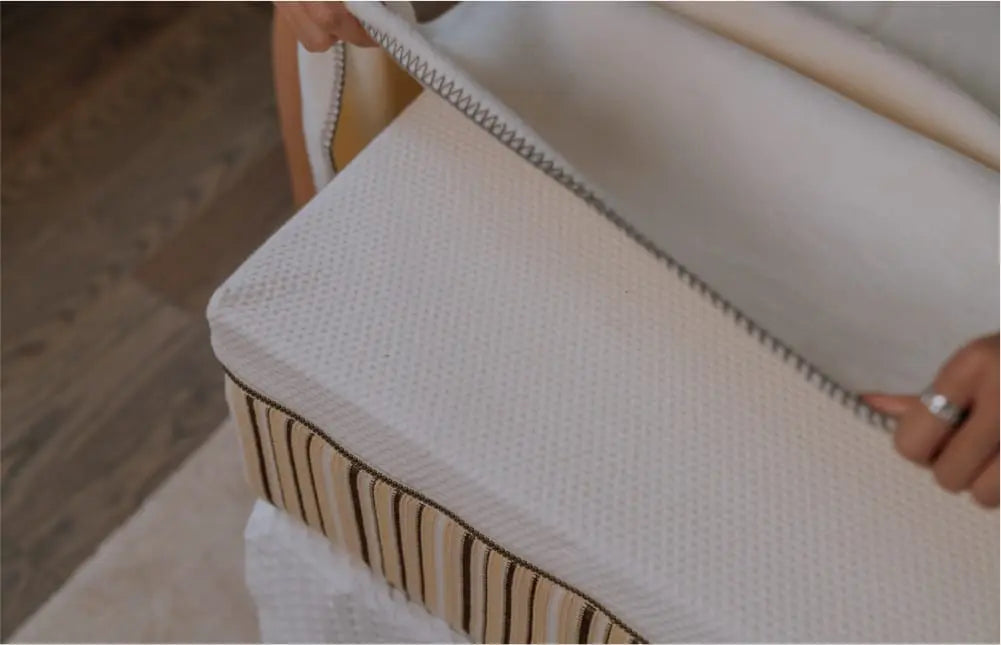
That’s why we focus on creating sleep systems that remove as many triggers as possible. Our Classic REM5 mattress was designed to regulate temperature, eliminate motion transfer, and support the body’s alignment, all of which help reduce parasomnia risk.
Can Anxiety Cause Sleepwalking?
The Mental Health Connection
Another common question: can anxiety cause sleep walking?
Yes, anxiety is often a root cause. It activates the same biological stress pathways as chronic stress, especially the hypothalamic-pituitary-adrenal (HPA) axis, which in turn disrupts NREM sleep. Since sleepwalking happens during these deep stages, anxiety increases the risk of parasomnia episodes.
Anxiety can also delay sleep onset, increase nighttime awakenings, and contribute to hyperarousal, where the brain remains on high alert even during sleep. All of this makes the sleep cycle more fragile and more prone to disruption.
If you experience anxiety-related sleep issues, visit our guide How to Sleep with Anxiety. It offers science-backed techniques for winding down your nervous system at night.
You can also learn more about how sleep affects your emotional well-being in our article The Link Between Sleep and Your Mental Health.
Sleepwalking in Adults
What Do the Statistics Tell Us?
While sleepwalking is more common in children, adults are not immune. In fact, sleepwalking in adulthood can be more dangerous due to increased risk of injury and underlying medical conditions.
Let’s look at the data:
- Sleepwalking affects up to four percent of adults
- About 30% of adults cite sleep issues as a reason they sleep apart
- A majority of adult sleepwalkers (≈ 59%) report that stress or strong emotions act as triggers
- Sleep deprivation and poor sleep quality are linked to increased frequency and severity of episodes
The rise in sleeping in separate rooms often reflects deeper issues related to incompatible sleep patterns or unaddressed parasomnias. But these statistics also highlight a more important truth: stress and poor sleep hygiene are at the core.
Instead of defaulting to separate sleep spaces, many people could benefit more from addressing the root causes, starting with the physical environment.
Optimizing Your Sleep Environment to Reduce Triggers
Once you understand that stress, anxiety, and poor sleep quality all contribute to parasomnias, the next step is clear: optimize the sleep environment to minimize triggers.

Key Environmental Factors:
- Motion Isolation: A bed that absorbs movement helps prevent sleep disruptions caused by a partner’s movement.
- Temperature Regulation: Overheating is a common cause of micro-awakenings.
- Allergen-Free Materials: Organic, non-toxic materials reduce immune stress.
- Supportive Ergonomics: Proper spinal alignment reduces nighttime tension.
- Visual Order: A clean, uncluttered bedroom promotes calm.
How a Quality Mattress Supports Restorative Deep Sleep
- Temperature-neutral sleep so you stay in deep sleep longer.
- Certified organic, non-toxic materials for peace of mind and body.
- Pressure-relief and full-body support to reduce tossing and arousals.
- Zero motion transfer, ideal for couples or stress-sensitive sleepers.
These changes act as direct interventions to protect your sleep cycle, and investing in a better mattress is a proactive health decision.
These environmental factors are fundamental to how your nervous system interprets your bedroom: as a place of safety, or as a source of stimulation.
Essentia is the only mattress that stacks all of these benefits into one sleep system, combining motion isolation, temperature regulation, allergy protection, and spinal support—without the use of synthetic foams or toxins. Our approach is grounded in neuroscience and built to support true regenerative rest.
To understand how each of these benefits contributes to deeper sleep, read The Problem with One-Dimensional Sleep: Why Your Mattress Needs to Stack Benefits.
How a Quality Mattress Supports Restorative Deep Sleep
Stress and anxiety directly influence how your brain operates at night. If your body can’t enter and stay in deep NREM sleep, it increases the likelihood of parasomnias like sleepwalking.
Creating a safe, restorative sleep environment is the foundation for breaking this cycle.
We design sleep systems to do exactly that. Our Classic REM5 Organic Mattress provides:
-
Temperature-neutral sleep so you stay in deep sleep longer.
-
Certified organic, non-toxic materials for peace of mind and body.
-
Pressure-relief and full-body support to reduce tossing, turning, and arousals.
-
Zero motion transfer, ideal for couples or stress-sensitive sleepers.
You don’t have to live with disrupted sleep. With the right environment and tools, your bedroom can become a place of true rest, and your brain and body will thank you for it.
FAQ: Frequently Asked Questions About Sleepwalking
Is sleepwalking dangerous?
Yes. While some episodes are harmless, sleepwalking increases the risk of injury, especially if stairs, sharp furniture, or unlocked doors are involved.
Can stress really cause sleepwalking?
Yes. Stress disrupts deep sleep, leading to more frequent and intense parasomnias like sleepwalking.
Why do some people sleepwalk more than others?
Genetics, stress, sleep deprivation, medications, and sleep environment all play a role. Some people are simply more prone to disrupted sleep cycles.
Can improving your sleep environment help?
Absolutely. A supportive mattress, cool temperature, and clean space reduce many of the triggers linked to sleepwalking.
Does sleeping in separate rooms reduce sleepwalking?
Sometimes. But before that step, it’s worth optimizing your mattress and sleep hygiene to support both partners’ sleep.
