

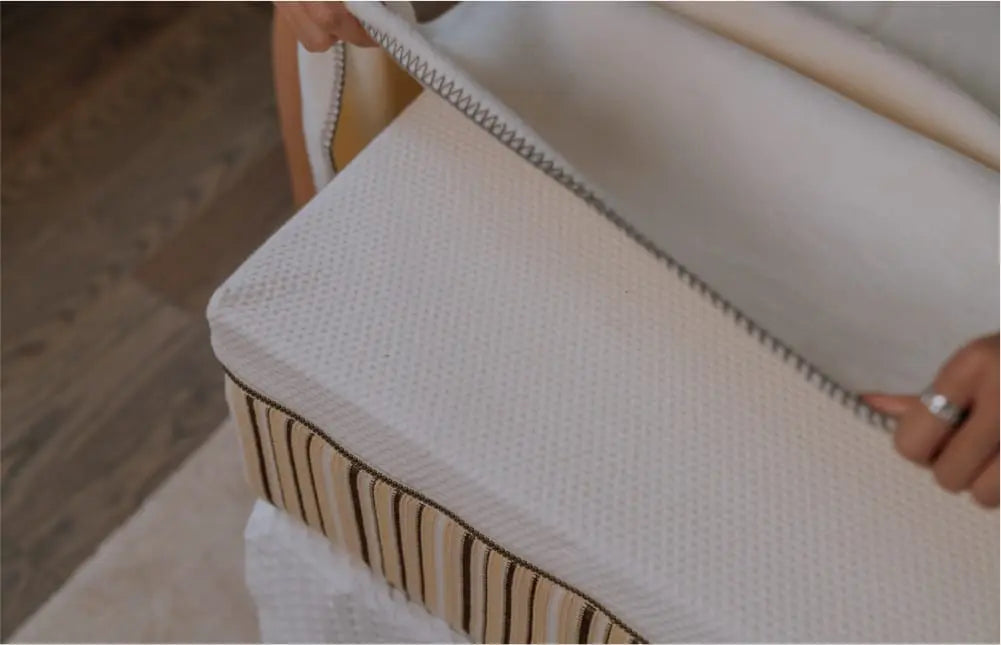


The low-tox living movement has evolved far beyond kitchen cupboards and skincare routines. More people are taking a closer look at the products they use every day, asking thoughtful questions about the materials that surround them and how those choices contribute to their overall well-being. While no home can be completely free of chemicals, making intentional choices about the spaces where you spend the most time, especially your bedroom, can help support a healthier sleep environment.
Key Takeaways
- Low-tox living focuses on reducing unnecessary chemical exposures where practical, not achieving perfection.
- The bedroom deserves special attention because we spend roughly one-third of our lives there.
- Mattresses, bedding, furniture, fragrances, and laundry products can all contribute to your indoor environment.
- Choosing natural materials and products with trusted certifications can help support a healthy bedroom.
- A non-toxic mattress and non-toxic bedding are among the highest-impact upgrades because they are in close contact with your body for hours every night.
- Small, intentional changes made over time are often more sustainable than trying to overhaul your home all at once.
In This Article
Certifications to Look For
GOLS Certified GOTS Certified OEKO-TEX® Standard 100These are three of the leading independent certifications for organic latex and textiles. See all our certifications →
What "Low-Tox" Actually Means and What It Doesn't
If you've spent any time on social media recently, you've probably encountered the term "low-tox living." From influencers replacing plastic food containers to families switching cleaning products, the movement has gained significant momentum. But despite its popularity, the phrase is often misunderstood.
Low-tox living does not mean eliminating every synthetic material or avoiding all chemicals. In fact, everything around us, including water and the air we breathe, is made up of chemicals.
Instead, low-tox living is about reducing unnecessary exposure to substances that may contribute to indoor pollution when practical alternatives exist. It is also about recognizing that wellness doesn't come from perfection.
Rather than creating anxiety around every purchase, a low-tox approach encourages informed, gradual decisions based on evidence, personal priorities, and realistic lifestyle changes. For many households, that might mean:
- Choosing fragrance-free cleaning products
- Ventilating the home regularly
- Selecting natural fibers when replacing bedding
- Looking for trusted third-party certifications
- Investing in products designed with healthier materials
Ultimately, clean living is less about fear and more about making thoughtful choices that support long-term well-being.
The Broader Low-Tox Movement: From Cookware to Cosmetics to Home
The low-tox movement began largely in the kitchen. Consumers started replacing plastic food containers, non-stick cookware, and plastic water bottles.
Soon afterward, attention shifted toward personal care. Many people began evaluating skincare ingredients, cosmetics, shampoo, deodorant, and household cleaning products.
Today, the conversation has expanded into the home itself. People are increasingly asking questions such as:
- What is my furniture made from?
- What finishes were used?
- How does indoor air quality affect my health?
- What materials am I sleeping on every night?
This evolution reflects a broader understanding that wellness is shaped not only by what we eat, but also by the environments we spend time in. As awareness grows, the low-tox home has become the next frontier in healthy living.
Why the Bedroom Is the Next Focus Area

Unlike many rooms in the home, the bedroom is where we spend approximately one-third of our lives. For seven to nine hours each night, we remain in close contact with the same surfaces while breathing the same indoor air. That makes the bedroom one of the most important environments to consider when creating a healthier home.
The Science: Cumulative Exposure and Eight Hours Every Night
Environmental health researchers often discuss the concept of cumulative exposure. Rather than focusing on a single product or ingredient, cumulative exposure recognizes that our overall environment is made up of many small, everyday exposures.
This doesn't mean every exposure is harmful. It does suggest, however, that making thoughtful improvements across multiple aspects of the home may collectively support better indoor environments over time. Because sleep occupies such a large portion of our lives, even relatively small improvements to the bedroom can have an outsized impact.
Bedding: Sheets, Pillowcases and Blanket Materials
Your bedding is the layer closest to your skin every night. Natural fibers such as certified organic cotton and wool offer several advantages: breathability, moisture management, comfort across seasons, and durability.
Choosing non-toxic bedding also means paying attention to dyes, finishes, and certifications rather than focusing solely on thread count. The goal is to create a sleep environment that supports comfort while minimizing unnecessary chemical treatments whenever possible.
Furniture and Finishes
Bedrooms often contain multiple sources of indoor emissions beyond the mattress itself. These may include engineered wood furniture, paint, flooring, adhesives, and upholstered furniture.
Many newer products naturally release volatile organic compounds (VOCs) for a period after manufacturing, a process commonly referred to as off-gassing. Simple strategies can help reduce indoor concentrations:
- Opening windows regularly
- Allowing new furniture to air out
- Choosing low-VOC paints during renovations
- Looking for independently certified materials
Fragrances and Air Quality
A pleasant-smelling bedroom may seem inviting, but many common fragrance products can introduce additional chemicals into indoor air. Examples include plug-in air fresheners, scented candles, aerosol sprays, and reed diffusers.
This doesn't necessarily mean they should never be used. However, relying on good ventilation, fresh air, and regular cleaning often supports a naturally fresher bedroom without introducing additional fragrance compounds.
Laundry Products
Laundry routines also influence your sleep environment. Residue from heavily fragranced detergents, fabric softeners, and dryer sheets remains on sheets, pillowcases, and sleepwear.
For those seeking a healthy bedroom, simple alternatives may include fragrance-free detergents, wool dryer balls, avoiding fabric softeners when unnecessary, and washing new bedding before first use. These small adjustments can help reduce unnecessary fragrance exposure while preserving the natural breathability of fabrics.
The Mattress Factor: Why the Surface Itself Matters Most

While every component contributes to your bedroom environment, the mattress deserves particular attention. Unlike furniture you touch briefly throughout the day, your mattress supports your body for roughly eight hours every night. It influences comfort, temperature regulation, pressure relief, airflow, and the materials immediately surrounding your breathing space.
If you're interested in low-tox living, selecting a non-toxic mattress is often one of the most meaningful investments you can make.
Traditional memory foam mattresses are typically made using polyurethane foam, a petrochemical-derived material. While many products meet applicable safety standards, some consumers prefer mattresses made with certified organic materials that minimize reliance on synthetic foams.
Essentia takes a different approach to comfort by using its patented Beyond Latex™ organic foam. Made with GOLS-certified organic latex rather than polyurethane-based memory foam, it delivers a pressure-relieving, slow-response feel while helping create a cleaner sleep environment.
🌿 What Makes Beyond Latex™ Different
Rather than polyurethane-based memory foam, Beyond Latex™ is made with GOLS-certified organic latex. It's designed to deliver the same pressure-relieving, contouring feel sleepers look for in memory foam, without relying on the petrochemical-derived materials conventional foam is built from.
For shoppers looking for a chemical free mattress, it's worth noting that no mattress can accurately be described as completely "chemical-free," all materials are made of chemicals. A more meaningful distinction is whether a mattress is made with certified organic materials and designed to reduce unnecessary chemical inputs compared with conventional alternatives.
Certifications Worth Knowing
Marketing terms such as "natural," "green," and "eco-friendly" can be difficult to interpret. Independent certifications provide greater transparency.
⚠️ Watch Out for Vague Marketing Terms
Words like "natural," "green," and "eco-friendly" aren't regulated, so any brand can use them regardless of what's actually inside a product. Independent, third-party certifications like GOLS, GOTS, and OEKO-TEX® are what actually verify a claim, so it's worth checking for the certification itself rather than the marketing language around it.
GOLS (Global Organic Latex Standard)
GOLS certifies organic latex throughout the supply chain, from raw material sourcing to finished products.
GOTS (Global Organic Textile Standard)
GOTS evaluates organic textile production, including cotton and wool, while also considering environmental and social criteria.
OEKO-TEX® Standard 100
OEKO-TEX tests finished textiles for a wide range of substances considered harmful to human health.
Each certification evaluates different aspects of a product, so understanding what each one represents can help consumers make more informed decisions.
A Practical Bedroom Audit Checklist

Transitioning toward a low-tox home doesn't need to happen overnight. Consider evaluating your bedroom one category at a time.
Bedding
- ☐ Choose natural fibers where possible
- ☐ Wash new bedding before use
- ☐ Replace worn synthetic fabrics when appropriate
Laundry
- ☐ Use fragrance-free detergent
- ☐ Skip unnecessary fabric softeners
- ☐ Consider wool dryer balls
Air Quality
- ☐ Open windows regularly
- ☐ Vacuum and dust consistently
- ☐ Reduce unnecessary fragrance products
Furniture
- ☐ Allow new furniture to off-gas before use
- ☐ Choose low-VOC finishes during renovations
Mattress
- ☐ Evaluate age and condition
- ☐ Look for trusted certifications
- ☐ Consider certified organic materials when it's time to replace your mattress
Progress, not perfection, is the goal.
Start Where You Spend One-Third of Your Life
Building a healthier home doesn't require replacing everything you own. Instead, focus first on the spaces that have the greatest impact on your daily life.
When it's time to replace your mattress, choosing one made with certified organic materials can be one of the highest-impact changes you make. Essentia's Beyond Latex™ organic foam was created to deliver the pressure-relieving comfort many sleepers seek while supporting a cleaner sleep environment through thoughtfully selected, certified organic materials.
Low-tox living isn't about achieving perfection. It's about making intentional choices that support your well-being, starting with the place where your body does its most important work: sleep.
Ready to build a lower-tox bedroom?
Start with the surface you spend the most time on, an organic mattress built without unnecessary chemical inputs.
Shop Organic Mattresses